

Losing skilled employees impacts costs, team morale, and productivity, which is why companies are focusing on effective Employee Retention Strategies in India to ensure stability and long-term growth.
The modern job market is highly competitive, and while attracting top talent is important, keeping them engaged and committed is an even bigger challenge. Organizations across industries are experiencing rising attrition rates, making it essential to focus on long-term employee satisfaction, growth, and workplace culture.
From startups to large enterprises, companies are realizing that keeping employees engaged, motivated, and satisfied directly impacts productivity and profitability. As workforce expectations evolve, retention is no longer about salary alone, it’s about culture, growth, and purpose.
Why Employee Retention Matters More Than Ever
The cost of losing a skilled employee goes beyond recruitment expenses. It affects team morale, disrupts workflows, and reduces overall efficiency. This is why businesses are actively investing in effective Employee Retention Strategies in India to maintain stability and long-term growth.
In recent years, Employee Retention in India has become a top priority for HR leaders due to increasing job opportunities and global competition for talent. This is why many organizations are also partnering with leadership hiring consultants to attract and retain the right talent. Employees today are more willing to switch jobs if their expectations are not met.
Key Challenges in Employee Retention
Before implementing solutions, it’s important to understand the challenges:
- Lack of career growth opportunities
- Poor work-life balance
- Ineffective leadership
- Limited recognition and rewards
- Outdated workplace culture
These challenges highlight why strong Employee Retention Strategies in India are essential for modern organizations.
Top 10 Employee Retention Strategies in India
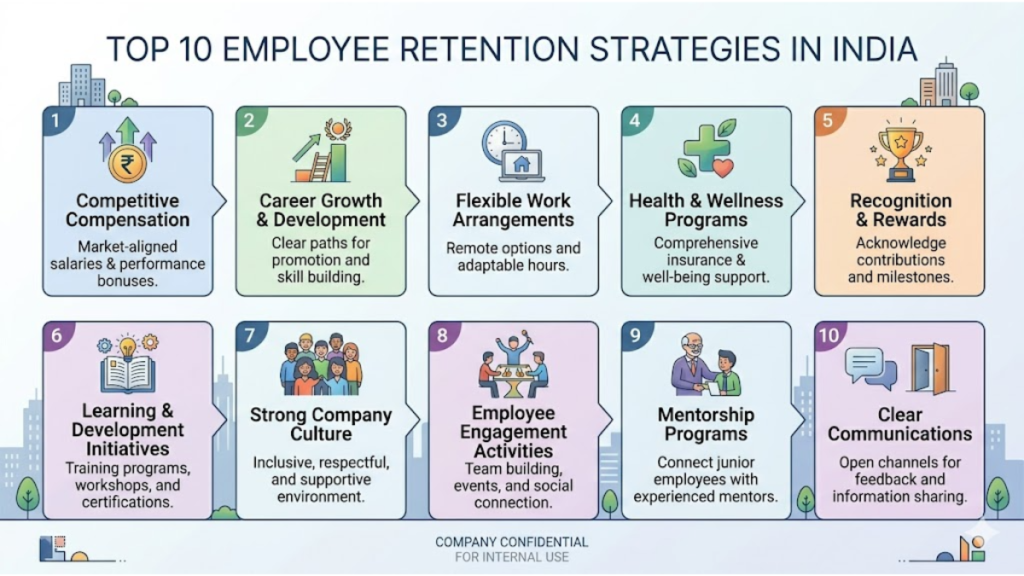
1. Offer Competitive Compensation & Benefits
Salary is still a major factor influencing retention. Companies that regularly benchmark salaries and offer competitive packages perform better in Employee Retention in India.
However, compensation is not just about salary anymore. Benefits like health insurance, flexible work options, and bonuses play a significant role in Employee Retention Strategies in India.
2. Provide Learning & Development Opportunities
Continuous learning keeps employees engaged and future-ready. Organizations investing in training programs see improved Employee Retention in India.
Upskilling initiatives are becoming a core part of Employee Retention Strategies in India, especially in industries like IT and digital marketing.
3. Build a Strong Company Culture
Work culture plays a huge role in retention. A positive, inclusive, and transparent environment encourages employees to stay longer.
Many companies are redesigning their workplaces to improve Employee Retention Strategies in India, focusing on collaboration and employee well-being.
4. Recognize and Reward Performance
Recognition is a powerful motivator. Employees who feel valued are less likely to leave.
Implementing reward systems is one of the most effective Employee Retention Strategies in India, as it directly boosts morale and engagement.
5. Create Clear Career Growth Paths
Employees want to see a future within the organization. Without growth opportunities, they are more likely to leave.
Organizations focusing on structured career development programs see better Employee Retention in India outcomes. Clear promotion paths and skill development plans are key Employee Retention Strategies in India.
6. Promote Work-Life Balance
Burnout is one of the biggest reasons employees quit. Flexible work arrangements, remote options, and wellness programs are crucial.
Companies prioritizing employee well-being are leading in Employee Retention in India, making work-life balance a key focus of Employee Retention Strategies in India.
7. Strengthen Leadership and Management
Employees don’t leave companies, they leave managers. Strong leadership is critical for retention.
Organizations are investing in leadership training as part of their Employee Retention Strategies in India to build supportive and effective managers.
8. Encourage Open Communication
Transparent communication builds trust and reduces misunderstandings.
Companies that actively listen to employee feedback improve Employee Retention in India, making communication a vital part of Employee Retention Strategies in India.
9. Foster Employee Engagement
Engaged employees are more productive and loyal. Activities like team-building events, surveys, and feedback sessions enhance engagement.
Employee engagement initiatives are among the most impactful Employee Retention Strategies in India for long-term success.
10. Offer Flexible Work Models
The shift to hybrid and remote work has changed employee expectations.
Organizations adapting to flexible work trends are seeing better Employee Retention in India, making it one of the most relevant Employee Retention Strategies in India today.
Role of HR & Recruitment in Retention
Retention starts right from hiring. Companies that hire the right fit experience lower attrition.
This is where collaboration with executive search firms in india becomes valuable, as they nhelp identify candidates who align with company culture and long-term goals, supporting better retention outcomes.
Emerging Trends in Employee Retention (2026)
The future of Employee Retention Strategies in India is evolving rapidly. Here are some key trends:
1. Personalized Employee Experience
Organizations are tailoring experiences based on individual preferences to improve Employee Retention in India.
2. Focus on Mental Health
Employee well-being programs are becoming essential components of Employee Retention Strategies in India.
3. Technology-Driven HR
AI and analytics are being used to predict attrition and improve Employee Retention in India.
4. Diversity & Inclusion
Inclusive workplaces are driving better engagement and stronger Employee Retention Strategies in India.
Measuring Employee Retention Success
To ensure effectiveness, companies must track key metrics:
- Attrition rate
- Employee satisfaction score
- Engagement levels
- Retention rate by department
Tracking these metrics helps refine Employee Retention Strategies in India and improve overall workforce stability.
Common Mistakes to Avoid
Even the best plans can fail if executed poorly. Avoid these mistakes:
- Ignoring employee feedback
- Focusing only on salary
- Lack of transparency
- Poor onboarding process
Avoiding these pitfalls is crucial for improving Employee Retention in India.
Practical Tips to Improve Retention Immediately
Here are some quick actions companies can take:
- Conduct regular employee surveys
- Introduce recognition programs
- Offer flexible working hours
- Improve internal communication
These small steps can significantly enhance Employee Retention Strategies in India.
Conclusion
In a rapidly changing work environment, retaining top talent is one of the biggest challenges businesses face. Implementing effective Employee Retention Strategies in India is not just an HR function, it’s a business necessity.
Companies that prioritize employee satisfaction, growth, and well-being are more likely to succeed in the long run. By focusing on the right strategies, organizations can improve Employee Retention in India, reduce hiring costs, and build a strong, loyal workforce.
The future belongs to organizations that value their people. Investing in smart Employee Retention Strategies in India today will ensure sustainable growth and success tomorrow.
FAQ’s
-
1. What are employee retention strategies?
Employee retention strategies are methods and practices used by organizations to keep employees engaged, satisfied, and committed for the long term.
-
2. Why is employee retention important for businesses in India?
Employee retention is important because it reduces hiring costs, improves productivity, and helps maintain a stable and experienced workforce.
-
3. What are the main reasons employees leave their jobs?
Common reasons include lack of career growth, poor management, low salary, work-life imbalance, and lack of recognition.
-
4. How can companies improve employee retention?
Companies can improve retention by offering competitive salaries, career growth opportunities, flexible work options, and a positive work culture.
-
5. What role does company culture play in retention?
A strong and positive company culture increases employee satisfaction, engagement, and loyalty, which helps reduce attrition.
-
6. How does work-life balance impact employee retention?
Good work-life balance reduces stress and burnout, making employees more likely to stay with the organization.
-
7. What are the best employee retention strategies in India?
Some effective strategies include employee recognition, career development programs, flexible work policies, and strong leadership.
-
8. How can HR teams measure employee retention success?
HR teams can track metrics like attrition rate, employee engagement scores, and retention rate to measure success.
-
9. Does employee engagement affect retention?
Yes, highly engaged employees are more productive, satisfied, and less likely to leave the organization.
-
10. What are the latest trends in employee retention?
Key trends include remote work, mental health support, personalized employee experiences, and continuous learning opportunities.